Plants thrive under a balance of light, humidity, temperature, and protection from pests. One of the best tools to achieve this balance is the shade net. Whether you are a commercial grower, hobby gardener, or landscape designer, choosing the right shade net can make a big difference. In this guide, we’ll explore what shade nets are, their benefits, how to choose the right one, and how Priyadarshini Filaments Pvt. Ltd. offers solutions in this space.
What Is a Shade Net?
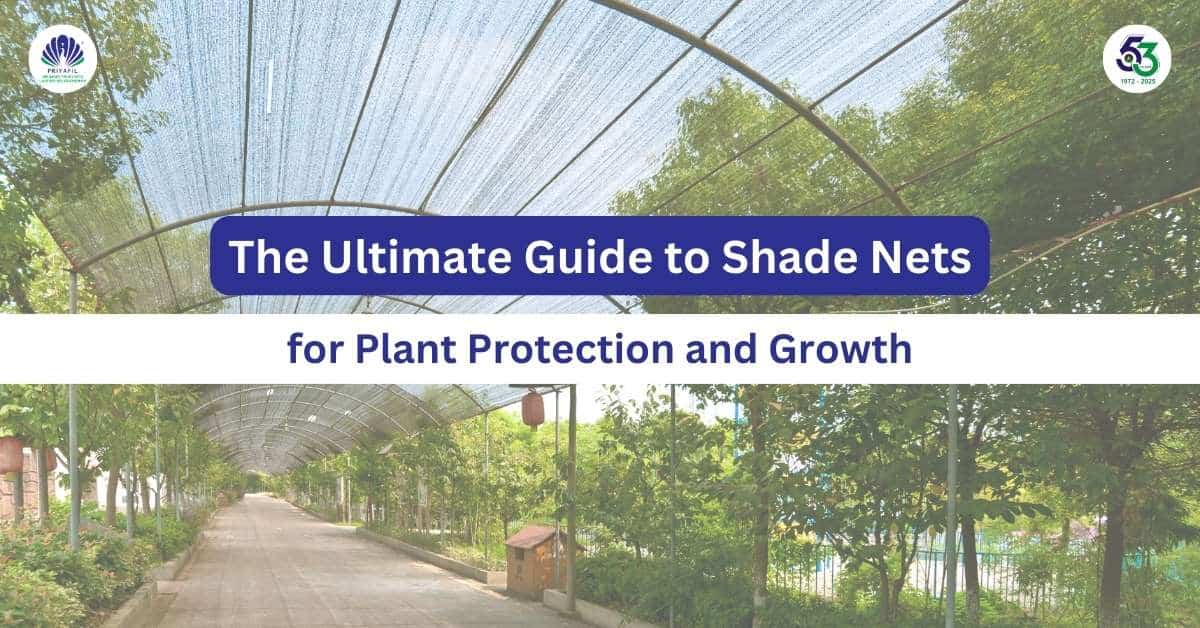
A shade net is a woven or knitted fabric, usually made from UV-stabilized HDPE (High-Density Polyethylene), used to modify or reduce the intensity of sunlight reaching plants. It allows some light, airflow, and moisture, while protecting plants from harsh sun, excessive heat, pests, and other environmental stresses.
Why Use Shade Nets?
Here are the main advantages of using shade nets:
Light Control
Shade nets reduce direct sunlight, which helps avoid leaf burn and stresses from too much radiation. They allow just enough filtered light for photosynthesis, improving plant health and growth.
Temperature & Humidity Regulation
By cutting down on sunlight, shade nets help keep greenhouse interiors cooler. They also can help retain moisture, reduce evaporation, and stabilize humidity, all of which are favourable for many plant species.
Protection from Pests, Birds & Weather
Shade nets can act as a barrier against pests and birds. They also reduce wind damage, protect from hail, and shield plants under temporary harsh weather.
Energy Efficiency & Water Saving
Since shade nets reduce heat load, greenhouses need less cooling. Moreover, less direct sun means reduced water loss through evaporation, which means less irrigation costs.
Improved Yield & Quality
The healthier the growing conditions, the better the plant growth, flowering, fruiting. Shade nets used correctly can lead to higher yields and improved crop quality.
Applications: Where and How Shade Nets Are Used
Shade nets are versatile. Some key applications include:
Agriculture / Horticulture / Floriculture
Nurseries, greenhouses, and open fields where plants need protection from harsh sun or variable weather. Shade nets help produce more uniform seedlings, protect delicate blooms, etc.
Seedling / Vegetative stage protection
Young plants are more sensitive to light intensity. Proper shade helps in better root and leaf development.
Sericulture (silk farming) & specialty crops
For crops like mulberry and tea, where light, humidity regulation is very important. Agro shade net fabrics are to be used accordingly.
Aquaculture / Fish Ponds
Shade nets help reduce overheating of ponds, prevent algae overgrowth, and protect fish from predators. Priyafil offers fabric for pond fencing and covering.
Other uses
Car parks, scaffoldings, cattle sheds, decorative tents, event flooring, etc. Shade nets can also be used for micro-climate control in public spaces.
Choosing the Right Shade Net for Your Situation
Here’s a step-by-step approach to picking the right shade net:
Understand Your Climate
Hot, arid climates need more shade; cooler, humid climates may need less. Look at sun intensity, hours of direct sunlight.
Know Your Plant’s Light Requirements
Some plants need full sun; others thrive under filtered / partial shade. Shade factor should align, for example, 50% shade for many vegetables; 75-90% for shade-loving ornamentals or seedlings.
Assess Duration & Exposure
Will the shade net be permanent or temporary? For long duration, durability, UV resistance, proper construction are more critical.
Select Material & Shade Factor
Based on plant & climate, choose shade percentage; pick colour based on heat and light modulation; choose mono/tape type based on strength and cost.
Measure & Plan Installation
Measure area accurately, plan for airflow, allow sides/openings for ventilation, ensure support structures can bear wind load etc.
Maintenance
Keep shade net clean from dust and debris; check edges to avoid tearing; remove or replace when worn out. A good quality net should last several seasons. UV-stabilised HDPE nets from Priyafil are built for durability.
Common Mistakes and How to Avoid Them
- Using too heavy a shade (high percentage) which starves the plants of necessary light; or too light which doesn’t protect enough. Always match shade percentage to crop needs.
- Ignoring ventilation; poor airflow causes humidity buildup, disease risk.
- Poor mounting / support; strong winds can cause tearing, damage.
- Not considering seasonal changes: in summer more shade might be needed; in cooler months less.
- Not checking UV stabilisation or material quality, cheaper nets may degrade quickly.
Practical Tips for Installation and Maintenance
- Orient shade nets such that prevailing wind flow is not obstructed, helps with ventilation & reduces stress on structure.
- Secure edges firmly; use strong, weather resistant fixtures.
- Clean periodically (dust, soot, bird droppings) so light transmission is not severely reduced.
- Inspect for wear and tear; patch or replace sections as needed.
- Antibiotic, seasonal adjustments: remove or roll up shade nets during certain times to allow more light if required.
Conclusion
Shade nets are an indispensable tool in the gardener’s or farmer’s toolkit. When chosen well, considering shade factor, material, location, plant type, and budget, they can dramatically improve plant health, yield, and reduce losses from environmental stress.
With companies like Priyafil bringing decades of experience, strong material quality, customization, and wide product range, it becomes easier to match the right shade net to your needs.